Black voters powered Eileen Higgins’ Miami mayor win. Now they want results
The Miami Times
By Amelia Orjuela Da Silva
This article originally appeared in The Miami New Times.
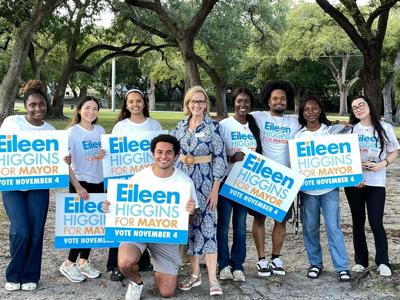
Eileen Higgins received overwhelming support from historically Black neighborhoods that have long demanded more than campaign-season promises.
(Eileen Higgins via Facebook)
When former Miami-Dade County Commissioner Eileen Higgins won Miami’s mayoral runoff on Tuesday, Dec. 9, she didn’t just make history as the city’s first woman mayor; she did it with overwhelming support from historically Black neighborhoods that have long demanded more than campaign promises.
Higgins defeated former Miami city manager Emilio González with 59% of the vote, ending a nearly three-decade stretch without a Democrat in the city’s top job. She received 84.47% of the vote in District 5, home to historically Black communities, with Liberty City precincts reaching as high as 93%. Her support was also strong in District 2, where she earned nearly 70% of the overall vote, including about 80% across four precincts in the predominantly Black West Grove.
For residents and community leaders, now begins the real test: whether that decisive mandate translates into measurable action.
“A mayoral transition is consequential because city leadership directly impacts housing, infrastructure, public safety, and economic opportunity,” said Valencia Gunder, executive director of The Black Collective. “Black Miami knows the cycle: big promises during election season, then silence once candidates are elected.”
From campaign to governance
Upon her election, Higgins called her win “humbling and historic,” but said that, beyond symbolism, it’s a responsibility she does not take lightly. She pointed directly to the coalition that helped power her victory.
“As we begin this transition, I am squarely focused on delivering real results for the people who placed their trust in me, including African-American voters whose leadership and participation helped shape this victory."
Higgins ran her campaign on restoring public trust in City Hall, a change many residents hope to see.
“A lot of corruption was coming out of City Hall,” said Ashley Toussaint, a long-time Little Haiti resident. “Even watching commission meetings is kind of embarrassing. I think that someone like Eileen, with her demeanor, would bring more professionalism.”
Higgins acknowledges that trust must be earned through transparency, integrity, and follow-through.
“History matters, but what matters most is what we do next,” she said.
She says the concerns she heard in historically Black neighborhoods were consistent: rising costs, stalled infrastructure, a lack of public safety, and limited access to economic opportunity.
Higgins has assembled a diverse transition team to shape her first 100-day agenda, including Tina Brown, CEO of the Overtown Youth Center, and Gepsie Morissett-Metellus, co-founder and executive director of the Haitian Neighborhood Center Sant La. The mayor-elect said the agenda will focus on affordability, public safety, resilient infrastructure, and ethical, responsive governance.
‘Affordable to who?’
Miami’s housing affordability crisis and rising displacement dominate nearly every conversation on the state of the city. Gunder said the Black Collective spoke with more than 10,000 Black residents countywide in 2024, and that “fair, affordable and clean housing is the number one concern.”
“When the cost continues to go up, we're putting people in positions to say, ‘Do I pay rent or do I get food today?’” said Brittany Williams, field director of The Black Collective.
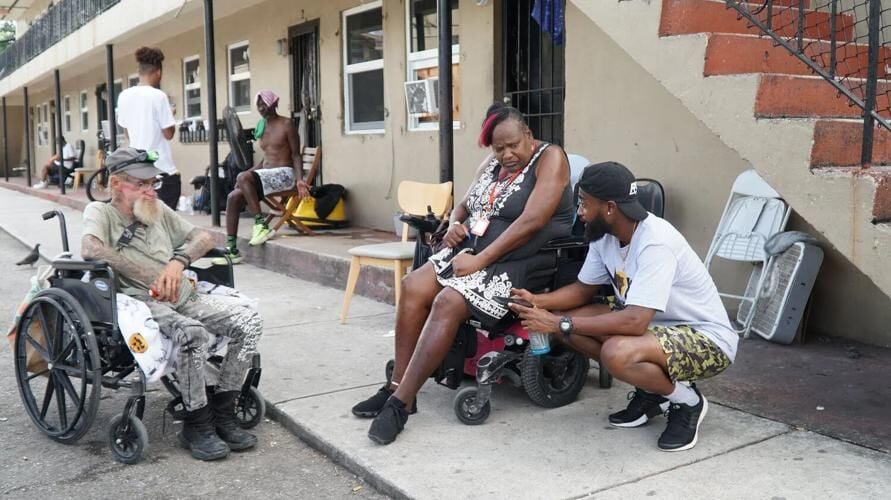
The Black Collective spoke with more than 10,000 Black residents countywide in 2024, and learned that affordability is the No. 1 concern.
(The Black Collective)
In Liberty City, longtime resident Mary Washington said the term “affordable” is often used without precision, with especially severe consequences for seniors and working families.
“Affordability for people who live in Brickell is not the same as affordability for people who live in my ZIP code, 33127,” Washington said.
The median household income in Liberty City falls below $40,000, while median rent for a two-bedroom apartment is about $2,200. That means roughly two-thirds of monthly income goes toward housing.
Washington pointed to annual 10% rent increases in her seniors-only building, which, she says, are unsustainable on fixed incomes.
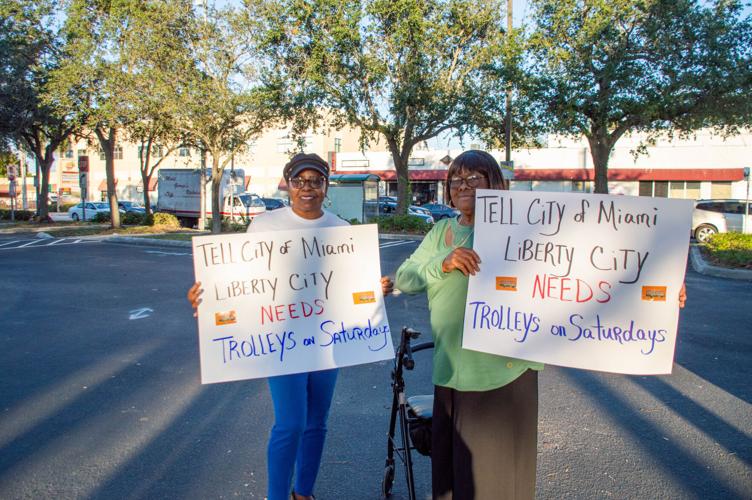
Mary Washington (left) said she hopes Higgins follows through on long-promised Saturday trolley service in Liberty City.
“How is it that senior-only buildings in the city of Miami can continue to increase the rent by 10%, and there's no way your Social Security check is ever going to go up by that much?”
She also pointed to the expiration of a city senior rental assistance program that has yet to be reinstated.
Nicole Crooks, an Overtown resident and community advocate, said development labeled “affordable” often remains out of reach for longtime residents, urging leaders to answer plainly: “Affordable for who?”
“New housing must be deeply affordable for everyone, and make sure you take time to connect with people, to create the relationships so that we know exactly what it is that the people need. No guessing, not top down. It has to be bottom up,” Crooks said.
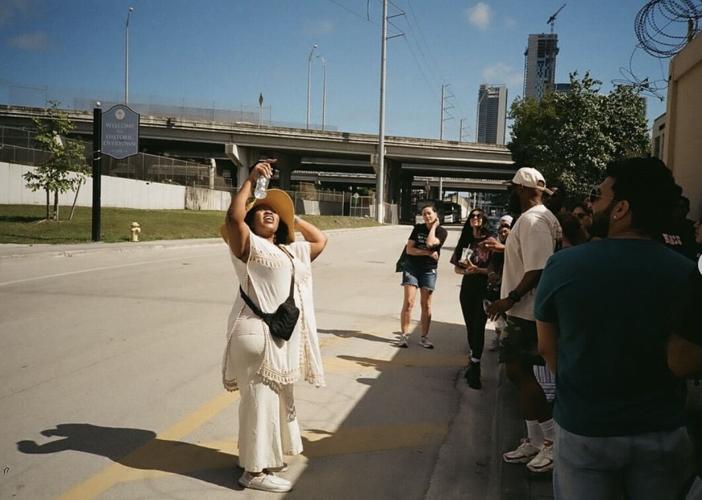
Nicole Crooks, an Overtown resident and community advocate, seen here on the left.
(Catalyst Miami)
She pointed to the displacement of elders in Overtown as a clear failure of governance.
“When you see elders who have lived in a space for longer than I’ve been alive being evicted from a location that, for all intents and purposes, they own — those are the protections that have to be number one.”
Gunder said skepticism in Black communities is rooted in experience.
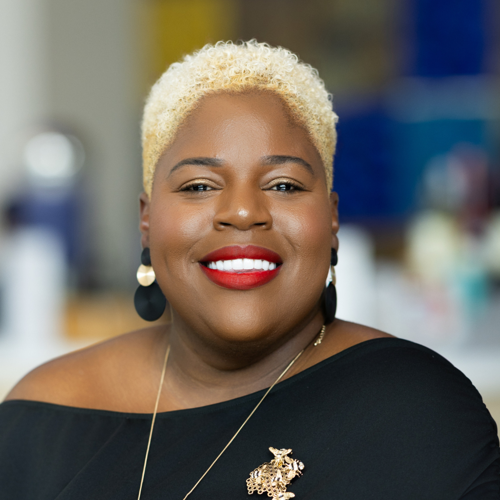
"Our expectation for this new mayor is simple: lead with the live realities of Black residents at the center. We are the heartbeat of the soul of this city, and we deserve a decisive role in shaping its future.” -Valencia Gunder, The Black Collective
“Black Miamians are rightfully skeptical of politicians who offer sweeping commitments without evidence that those commitments include us. Eileen Higgins is no different,” she said. “We have hope that she will be different.”
Gunder is calling for stronger tenant protections, including enforcement against predatory landlords, adoption of the Miami Workers Center Tenant Bill of Rights, and accountability for developers building mixed-income, community-centered projects.
Higgins has pledged to prioritize city-owned land for affordable and mixed-income developments and pair new construction with anti-displacement protections.
Transit and economic opportunities
Another flashpoint is the reliability and equity of public transit. Washington said she hopes Higgins follows through on long-promised Saturday trolley service in Liberty City — a demand residents have raised for years.
“We will modernize transit, including expanding trolley service in underserved areas so that residents can reach jobs and essential services affordably,” Higgins said.
Mariama Gregory, communications director for The Black Collective, said the current system neglects everyday residents.
“We know it’s possible to get things running in our communities on the weekend. Transportation also helps address food insecurity; people need access to grocery stores, hospitals, and schools.”
Toussaint, urging economic opportunity, said he was priced out of his own community as a business owner and called for greater access to city contracts.
“A lot of people don’t know how to get a city contract,” he said. “There needs to be education and access so people from our communities can actually apply.”
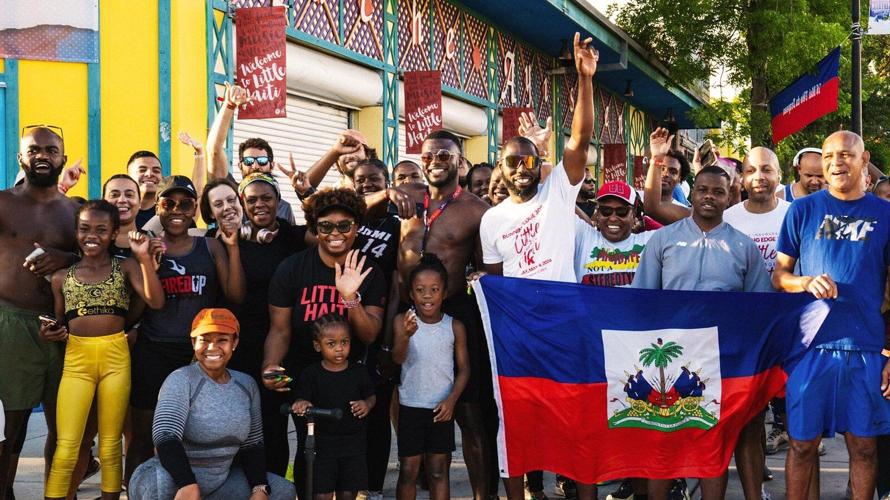
Ashley Toussaint called for greater investment in cultural institutions such as the Little Haiti Cultural Center.
He also called for stronger protections for small businesses and greater investment in cultural institutions such as the Little Haiti Cultural Center. Higgins said she plans to expand programs like ELEVATE and RISE to improve access to capital, workforce training, and city contracts for Black-owned businesses.
Holding Higgins accountable
For many residents, Higgins’ victory represents a contract, and her term, a performance review.
“When you vote, you’re hiring somebody. I just hired her,” said Eric Bason, an Overtown resident. “She works for us.”
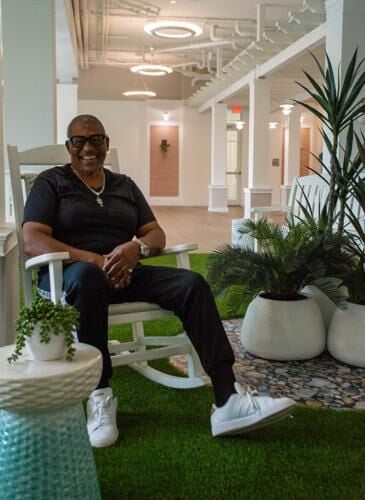
Eric Bason proposed a 90-day Black action plan and called for town halls in neighborhoods, not downtown hotels.
Across Miami’s historically Black communities, residents say accountability must go beyond quarterly reports, requiring the mayor to be present in communities.
“Decisions about transit, housing, or anything else can’t be made without getting really deep with the people most affected,” said Crooks. “People are experts on what they need.”
“In medicine, they call it triage,” he said. “You put the need where the most need is first, and you put the need with whoever brought you to the dance, and you dance with the people who brought you to the party.”
Washington called for an audit of 311 services, demanding quarterly reports on call outcomes, noting that many people, including herself, call or email 311 and never hear back.
In Little Haiti, Toussaint described accountability as something communities should be able to schedule. He wants regular progress updates presented to the Little Haiti Revitalization Trust, where he serves as vice-chair.
“Creating a space where it's like a liaison to the mayor's office about things that are happening in Little Haiti from a more local perspective,” he said. “An informal representative of the community with whom I have regular meetings with the mayor.”
As Higgins prepares for her Dec. 18 installation at Miami Dade College’s Wolfson Campus, Black communities across Miami say they are ready to engage and hold her to the mandate they delivered.
“Our expectation for this new mayor is simple: lead with the live realities of Black residents at the center,” Gunder said. “We are the heartbeat of the soul of this city, and we deserve a decisive role in shaping its future.”
By Amelia Orjuela Da Silva
This article originally appeared in The Miami New Times.
Eileen Higgins received overwhelming support from historically Black neighborhoods that have long demanded more than campaign-season promises.
(Eileen Higgins via Facebook)
When former Miami-Dade County Commissioner Eileen Higgins won Miami’s mayoral runoff on Tuesday, Dec. 9, she didn’t just make history as the city’s first woman mayor; she did it with overwhelming support from historically Black neighborhoods that have long demanded more than campaign promises.
Higgins defeated former Miami city manager Emilio González with 59% of the vote, ending a nearly three-decade stretch without a Democrat in the city’s top job. She received 84.47% of the vote in District 5, home to historically Black communities, with Liberty City precincts reaching as high as 93%. Her support was also strong in District 2, where she earned nearly 70% of the overall vote, including about 80% across four precincts in the predominantly Black West Grove.
For residents and community leaders, now begins the real test: whether that decisive mandate translates into measurable action.
“A mayoral transition is consequential because city leadership directly impacts housing, infrastructure, public safety, and economic opportunity,” said Valencia Gunder, executive director of The Black Collective. “Black Miami knows the cycle: big promises during election season, then silence once candidates are elected.”
From campaign to governance
Upon her election, Higgins called her win “humbling and historic,” but said that, beyond symbolism, it’s a responsibility she does not take lightly. She pointed directly to the coalition that helped power her victory.
“As we begin this transition, I am squarely focused on delivering real results for the people who placed their trust in me, including African-American voters whose leadership and participation helped shape this victory."
Higgins ran her campaign on restoring public trust in City Hall, a change many residents hope to see.
“A lot of corruption was coming out of City Hall,” said Ashley Toussaint, a long-time Little Haiti resident. “Even watching commission meetings is kind of embarrassing. I think that someone like Eileen, with her demeanor, would bring more professionalism.”
Higgins acknowledges that trust must be earned through transparency, integrity, and follow-through.
“History matters, but what matters most is what we do next,” she said.
She says the concerns she heard in historically Black neighborhoods were consistent: rising costs, stalled infrastructure, a lack of public safety, and limited access to economic opportunity.
Higgins has assembled a diverse transition team to shape her first 100-day agenda, including Tina Brown, CEO of the Overtown Youth Center, and Gepsie Morissett-Metellus, co-founder and executive director of the Haitian Neighborhood Center Sant La. The mayor-elect said the agenda will focus on affordability, public safety, resilient infrastructure, and ethical, responsive governance.
‘Affordable to who?’
Miami’s housing affordability crisis and rising displacement dominate nearly every conversation on the state of the city. Gunder said the Black Collective spoke with more than 10,000 Black residents countywide in 2024, and that “fair, affordable and clean housing is the number one concern.”
“When the cost continues to go up, we're putting people in positions to say, ‘Do I pay rent or do I get food today?’” said Brittany Williams, field director of The Black Collective.
The Black Collective spoke with more than 10,000 Black residents countywide in 2024, and learned that affordability is the No. 1 concern.
(The Black Collective)
In Liberty City, longtime resident Mary Washington said the term “affordable” is often used without precision, with especially severe consequences for seniors and working families.
“Affordability for people who live in Brickell is not the same as affordability for people who live in my ZIP code, 33127,” Washington said.
The median household income in Liberty City falls below $40,000, while median rent for a two-bedroom apartment is about $2,200. That means roughly two-thirds of monthly income goes toward housing.
Washington pointed to annual 10% rent increases in her seniors-only building, which, she says, are unsustainable on fixed incomes.
Mary Washington (left) said she hopes Higgins follows through on long-promised Saturday trolley service in Liberty City.
“How is it that senior-only buildings in the city of Miami can continue to increase the rent by 10%, and there's no way your Social Security check is ever going to go up by that much?”
She also pointed to the expiration of a city senior rental assistance program that has yet to be reinstated.
Nicole Crooks, an Overtown resident and community advocate, said development labeled “affordable” often remains out of reach for longtime residents, urging leaders to answer plainly: “Affordable for who?”
“New housing must be deeply affordable for everyone, and make sure you take time to connect with people, to create the relationships so that we know exactly what it is that the people need. No guessing, not top down. It has to be bottom up,” Crooks said.
Nicole Crooks, an Overtown resident and community advocate, seen here on the left.
(Catalyst Miami)
She pointed to the displacement of elders in Overtown as a clear failure of governance.
“When you see elders who have lived in a space for longer than I’ve been alive being evicted from a location that, for all intents and purposes, they own — those are the protections that have to be number one.”
Gunder said skepticism in Black communities is rooted in experience.
"Our expectation for this new mayor is simple: lead with the live realities of Black residents at the center. We are the heartbeat of the soul of this city, and we deserve a decisive role in shaping its future.” -Valencia Gunder, The Black Collective
“Black Miamians are rightfully skeptical of politicians who offer sweeping commitments without evidence that those commitments include us. Eileen Higgins is no different,” she said. “We have hope that she will be different.”
Gunder is calling for stronger tenant protections, including enforcement against predatory landlords, adoption of the Miami Workers Center Tenant Bill of Rights, and accountability for developers building mixed-income, community-centered projects.
Higgins has pledged to prioritize city-owned land for affordable and mixed-income developments and pair new construction with anti-displacement protections.
Transit and economic opportunities
Another flashpoint is the reliability and equity of public transit. Washington said she hopes Higgins follows through on long-promised Saturday trolley service in Liberty City — a demand residents have raised for years.
“We will modernize transit, including expanding trolley service in underserved areas so that residents can reach jobs and essential services affordably,” Higgins said.
Mariama Gregory, communications director for The Black Collective, said the current system neglects everyday residents.
“We know it’s possible to get things running in our communities on the weekend. Transportation also helps address food insecurity; people need access to grocery stores, hospitals, and schools.”
Toussaint, urging economic opportunity, said he was priced out of his own community as a business owner and called for greater access to city contracts.
“A lot of people don’t know how to get a city contract,” he said. “There needs to be education and access so people from our communities can actually apply.”
Ashley Toussaint called for greater investment in cultural institutions such as the Little Haiti Cultural Center.
He also called for stronger protections for small businesses and greater investment in cultural institutions such as the Little Haiti Cultural Center. Higgins said she plans to expand programs like ELEVATE and RISE to improve access to capital, workforce training, and city contracts for Black-owned businesses.
Holding Higgins accountable
For many residents, Higgins’ victory represents a contract, and her term, a performance review.
“When you vote, you’re hiring somebody. I just hired her,” said Eric Bason, an Overtown resident. “She works for us.”
Eric Bason proposed a 90-day Black action plan and called for town halls in neighborhoods, not downtown hotels.
Across Miami’s historically Black communities, residents say accountability must go beyond quarterly reports, requiring the mayor to be present in communities.
“Decisions about transit, housing, or anything else can’t be made without getting really deep with the people most affected,” said Crooks. “People are experts on what they need.”
“In medicine, they call it triage,” he said. “You put the need where the most need is first, and you put the need with whoever brought you to the dance, and you dance with the people who brought you to the party.”
Washington called for an audit of 311 services, demanding quarterly reports on call outcomes, noting that many people, including herself, call or email 311 and never hear back.
In Little Haiti, Toussaint described accountability as something communities should be able to schedule. He wants regular progress updates presented to the Little Haiti Revitalization Trust, where he serves as vice-chair.
“Creating a space where it's like a liaison to the mayor's office about things that are happening in Little Haiti from a more local perspective,” he said. “An informal representative of the community with whom I have regular meetings with the mayor.”
As Higgins prepares for her Dec. 18 installation at Miami Dade College’s Wolfson Campus, Black communities across Miami say they are ready to engage and hold her to the mandate they delivered.
“Our expectation for this new mayor is simple: lead with the live realities of Black residents at the center,” Gunder said. “We are the heartbeat of the soul of this city, and we deserve a decisive role in shaping its future.”
